A/B Testing in Web Design: Examples and Best Practices
A/B testing has become one of the most valuable tools for improving website performance. Whether you’re working with the best website design companies or optimizing an existing site on your own, A/B testing helps you understand what truly works for your audience. Instead of relying on guesswork, it uses real user data to improve conversions, user experience, and organic visibility.
This makes it essential for any web design and development agency aiming to deliver high-performing landing pages or businesses looking to invest in organic SEO services.
What Is A/B Testing in Web Design? Why It Matters
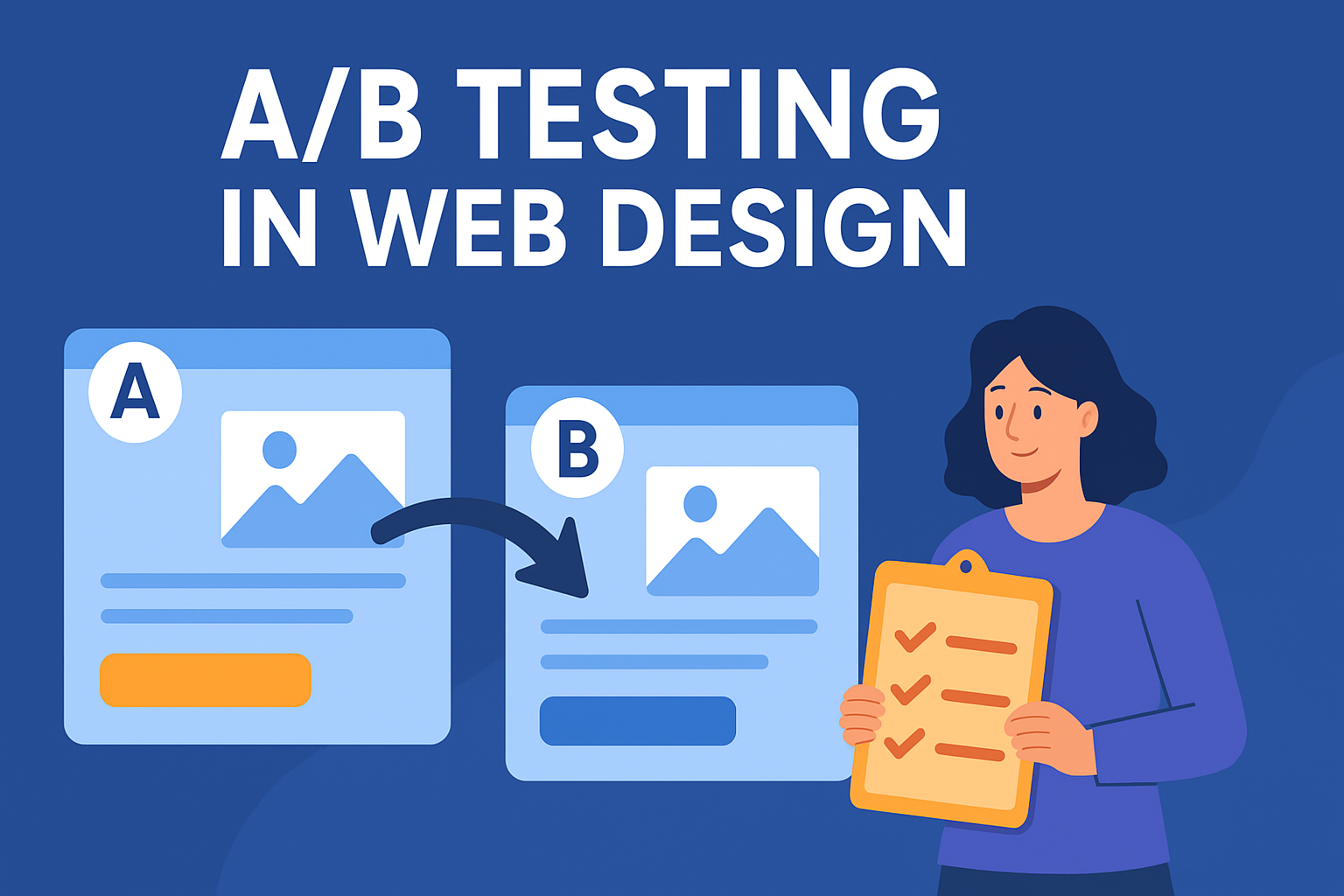
A/B testing in web design compares two versions of a webpage, Version A (the control) and Version B (the variation), to determine which one performs better. By testing a single element at a time, such as a headline, call-to-action button, or image, you get clear insights backed by real user behavior. This matters because even small design tweaks can dramatically influence conversions. In fact, 60% of marketers say A/B testing is their most effective conversion optimization method. For businesses competing online, these insights can be the difference between stagnant results and continuous improvement.Key Benefits of Website A/B Testing
1. Maximize ROI by Testing Before You Commit
Instead of redesigning your entire website, A/B testing allows you to test ideas safely. The best website design companies frequently use A/B testing before finalizing layouts, ensuring every design choice is validated by measurable results. This saves time, money, and effort.2. Reduce Risk by Validating Assumptions with Real Data
A/B testing removes the guesswork. What you think users prefer is often not what actually performs best. For example, a long-form landing page may convert better than a minimalistic one, or vice versa. Testing offers risk-free clarity.3. Identify What Not to Test to Save Time and Resources
Not every element influences conversions. A/B testing helps teams focus on high-impact areas, such as CTAs, page structure, and hero images. Professional teams like those in a web design and development agency rely on data to decide what’s worth testing.4. Small Changes, Big Wins: Why A/B Testing Is Worth It
Even minor improvements add up. Something as small as changing button color or repositioning testimonials can increase conversion rates significantly. Studies show that simple CTA changes alone can boost conversions by up to 21%.The Importance of User Experience in A/B Testing
A positive user experience (UX) is often the deciding factor in whether a visitor converts. A/B testing evaluates the UX in real-time, how people scroll, click, and engage. Testing UX elements such as page speed, layout hierarchy, and mobile responsiveness aligns perfectly with the goals of organic SEO services, since search engines reward user-friendly websites with better rankings.How to A/B Test Landing Pages Effectively
Step 1: Start with a Clear Hypothesis
A strong hypothesis gives your test direction. For example: “Changing the CTA color from blue to orange will increase sign-ups because the color stands out more clearly.”Step 2: Identify the Right Tools
Reliable tools ensure accurate test data. Some popular tools include:- Google Optimize (formerly)
- Optimizely
- VWO
- Hotjar
Step 3: Choose Landing Page Elements to Test
Landing pages offer many elements that influence conversions:- Headlines
- CTAs
- Hero images
- Layout structure
- Form length
- Colors and typography
